Common Range Rover Problems in Dubai Heat
Every Range Rover forum online will tell you these vehicles have a reputation for faults. What most of those threads miss is that the reputation was mostly earned in the UK and the US, in a climate that never asks the cooling system, the electronics or the rubber components to work anywhere near this hard. Move the same car to Dubai and a handful of faults become dramatically more common, while others that dominate the forums barely show up here at all.
This is the list as it actually looks from a Dubai workshop ramp: six faults that heat causes or accelerates far beyond what the same car would see in a mild climate, what each one looks like before it fails completely, and what it costs to put right.
None of these are reasons to avoid the car. They are reasons to service it on a Dubai interval rather than the one printed for a country that has never seen 45C, and to get anything unusual looked at before it becomes a roadside problem.
1. Cooling System Failures, and Why They Happen Suddenly
This is the fault that catches owners out hardest, because it rarely gives a slow warning.
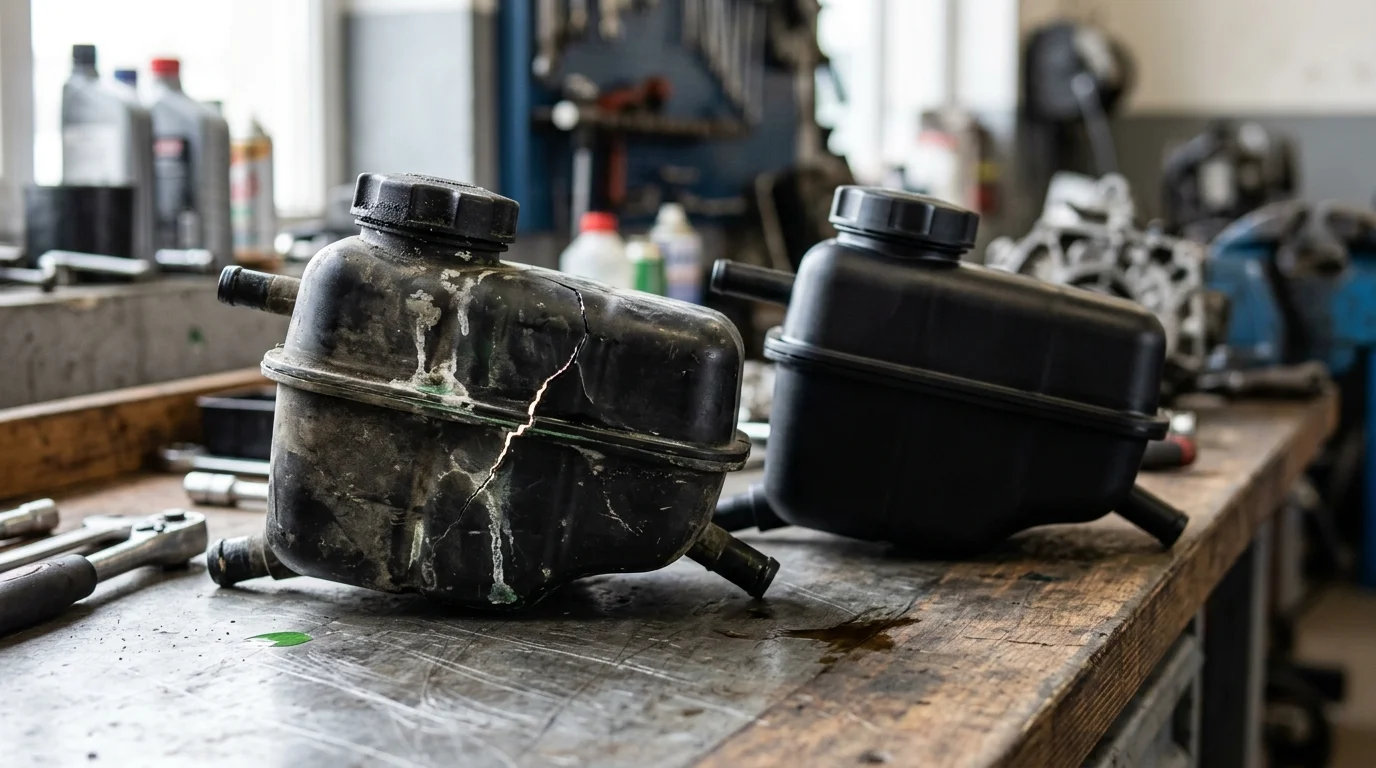
A large share of the cooling system on these engines, particularly the supercharged V8, is built from plastic: crossover pipes, the expansion tank, the thermostat housing. Plastic does not wear the way metal does. Repeated heat cycling in Dubai conditions makes it brittle over years, and brittle plastic under pressure does not develop a slow weep. It cracks, often without much warning, and the car can go from normal to overheating in a short drive.
The practical takeaway is to treat these components as wear items on a Dubai car rather than parts that only get replaced when they fail. A visual inspection at every service, particularly around hose connections and the expansion tank seams, catches most of these before they let go on the road. If your temperature gauge does anything unusual, our guide to what to do when a car overheats in Dubai covers the immediate steps.
Typical cost: a single crossover pipe or expansion tank runs AED 800 to 2,000 fitted. A full cooling system overhaul after a genuine overheat, including checking the head gasket, can run AED 5,000 to 12,000 depending on how far the damage spread.
2. Timing Chain Wear on the V8
The 5.0 litre supercharged V8 uses a metal timing chain rather than a belt, which sounds like the more durable choice, and mostly is. The chain itself rarely fails outright. What wears is the tensioner, and a worn tensioner lets the chain rattle, particularly on a cold start.
Heat matters here too, though less directly. Engines that run hotter for longer, which is the normal condition in Dubai traffic, put more cumulative stress on the oil that lubricates the tensioner and chain guides. Oil that is overdue for a change, which is common on cars serviced to a temperate interval rather than a Dubai one, accelerates the wear.
A rattle on cold start that quietens once the engine warms is the classic early sign. Ignored, it can progress to chain stretch, which affects timing accuracy and, at the extreme end, chain failure that causes serious internal engine damage.
Typical cost: a tensioner and guide replacement is AED 3,000 to 6,000. A full timing chain job, which usually includes tensioners, guides and gaskets, runs AED 8,000 to 18,000 depending on how much of the front of the engine needs to come apart.
3. Air Suspension Failure
The fault we hear about most from Dubai owners, and one we have covered in full elsewhere because it deserves its own explanation. Heat degrades the rubber air spring membranes until they crack and leak slowly, the compressor overworks trying to compensate, and a single leaking corner becomes a compressor failure if left alone.
Our complete guide to Range Rover air suspension failure in Dubai covers the symptoms, what a proper diagnosis involves, and 2026 repair costs in detail. Worth reading in full if a corner is sitting low or the compressor is running more than it used to.
4. Electrical Faults That Trace Back to the Battery
These vehicles carry a genuinely large number of control modules, and a surprising share of the electrical faults we diagnose are not electrical faults at all. They are a weak battery or unstable charging voltage producing warnings across systems that look completely unrelated: a suspension message, a transmission warning and an infotainment glitch appearing together, none of them caused by the system they are blamed on.
Dubai heat is genuinely hard on batteries, evaporating electrolyte and corroding internal plates faster than a temperate climate ever would. On a Range Rover that matters more than on a simpler car, because the electrical system has less tolerance for a marginal battery than an older, less computerised vehicle does.
Checking battery voltage before condemning any module is the single most cost effective step in diagnosing an electrical fault on these cars, and it is a step some garages skip because a new part is a bigger invoice than a battery test.
Typical cost: a battery test and replacement where needed is AED 400 to 900. Chasing electrical gremlins without first ruling out the battery can run diagnostic time into the thousands for a fault that a fresh battery would have resolved.
5. Supercharger and Drive Belt Wear
On the supercharged models, belt tensioners, idler pulleys and the supercharger coupling all see more heat cycling here than in a cooler climate, and rubber and bearing components wear accordingly. A whine that rises and falls with engine speed, particularly noticeable when accelerating, is the usual first sign.
Left alone, a failing idler or tensioner bearing can eventually seize, which takes the belt with it and can cause secondary damage to whatever the belt was driving.
Typical cost: a belt and tensioner service is AED 1,200 to 3,000. Left until a bearing seizes and damages the belt or a driven component, the bill moves considerably higher.
6. Oil Leaks From Timing and Valve Covers
The least dramatic fault on this list, and one of the most common. Gasket and seal material hardens faster in sustained heat, and a weep from the timing cover or a valve cover is routine on Range Rovers with meaningful mileage in this climate. It is rarely urgent, but oil dripping onto a hot exhaust or accumulating near electrical connectors is worth addressing before it is ignored for years.
Typical cost: resealing a valve cover or timing cover typically runs AED 1,000 to 2,500 depending on access. Left long enough that oil contaminates other components, the job grows accordingly.
Why These Faults Cluster in Dubai Specifically
Every one of the six above traces back to the same two environmental factors, which is worth understanding rather than treating each fault as unrelated bad luck.
Sustained high temperature degrades rubber and plastic components years faster than the design assumed, which is why air springs, cooling system plastics and belt components all show up here more than in the source markets these cars were engineered for.
Heat cycling under load, meaning the repeated heating and cooling of stop start Dubai traffic, stresses metal fatigue points such as timing tensioners and gasket materials in a way that steady motorway driving in a mild climate does not replicate.
Neither factor is something you can drive around. What changes the outcome is servicing to an interval that accounts for it, which our Range Rover service cost guide covers in detail, including the interval Land Rover specifies for this region and the shorter one we recommend given local conditions.
Frequently Asked Questions
Are Range Rovers reliable in Dubai? Reasonably, provided they are serviced to a Dubai appropriate interval rather than the printed schedule alone. Most of the faults that give the model its reputation are accelerated by heat and are catchable at routine inspection long before they cause a breakdown.
Why do Range Rovers overheat so often in Dubai? A significant part of the cooling system on these engines is plastic, and sustained heat cycling makes that plastic brittle over years. Brittle components under pressure tend to crack suddenly rather than develop a slow leak, which is why an overheat can appear with little warning.
Is the timing chain rattle serious? A rattle on cold start that clears once the engine warms usually points to a worn tensioner rather than the chain itself, but it should be inspected. Left long enough it can progress to chain stretch and, in the worst case, timing failure that causes serious engine damage.
Why does my Range Rover show unrelated electrical warnings together? This pattern often traces back to a weak battery or unstable charging voltage rather than several genuine faults. Checking battery health is the first and cheapest diagnostic step before any module gets replaced.
How much does it cost to fix Range Rover cooling problems in Dubai? A single plastic component such as a crossover pipe or expansion tank is typically AED 800 to 2,000 fitted. A full repair following a genuine overheat, including checking the head gasket, can run AED 5,000 to 12,000 depending on how much damage occurred.
Does servicing more often actually prevent these faults? It catches most of them early rather than preventing the underlying wear entirely. A cracked cooling component, a worn tensioner or a developing oil leak found at a routine inspection is a contained repair. The same fault found on the roadside after failing is not.
Catch It at a Service, Not on the Roadside
Every fault on this list is far cheaper to find at a routine inspection than to discover when it fails. A Range Rover serviced on an interval that accounts for Dubai heat, with a technician who knows which components to actually check rather than only what the schedule lists, is a genuinely dependable car in this climate.
If something on this list sounds familiar, or your car is due a proper inspection, get in touch and our Range Rover and Land Rover specialists will look at it properly before quoting anything. We cover the communities where these vehicles live, including Emirates Hills, Palm Jumeirah and Jumeirah Golf Estates, with our workshop in Al Quoz for anything that needs a lift.
Car Aid Team
18 September 2026
Share this article