Genuine vs Aftermarket Parts in Dubai: What to Choose
Every repair quote in Dubai eventually reaches the same fork in the road: genuine or aftermarket. The genuine part costs noticeably more, the aftermarket one is cheaper and often sitting on the same shelf, and the garage quoting you has no particular reason to steer you one way over the other unless you ask.
The honest answer is that neither option is correct for every part on the car. Some components are worth paying the premium on without a second thought. Others are a straightforward waste of money in genuine form. This guide covers which is which, the UAE rule that actually forces your hand on newer cars, and what the price gap looks like in practice.
If your car is under a year old, this decision may not be yours to make. UAE insurance regulation requires new original parts from the agency for vehicles in their first year, regardless of what you would otherwise choose.
What the Terms Actually Mean
Genuine, or OEM. The identical part fitted at the factory, sold in manufacturer branded packaging through the official dealer network. Same tooling, same specification, same supplier the car was built with.
Aftermarket. A replacement made by a company other than the vehicle's original manufacturer. This covers an enormous range, from parts built to match or exceed OEM specification down to the cheapest possible copy that happens to fit. Aftermarket is completely legal to buy and fit in the UAE, and the quality spread within that single word is the whole reason this decision is hard.
Used, or salvaged. A genuine part taken from another vehicle, usually at a scrapyard or dismantler. Cheaper again, and a different risk profile from new aftermarket, covered further down.
The UAE Rule Most Owners Do Not Know
This is the detail that actually overrides personal preference, and it is worth knowing before an accident forces the question on you.
For a vehicle under one year old, UAE insurance regulation requires that accident repairs use new original parts sourced through the agency. Insurers are not permitted to substitute aftermarket on a car this new, whatever the owner prefers.
Past the one year mark, insurers are permitted to use non-original parts of a similar grade. This is also roughly when most owners start asking the genuine versus aftermarket question themselves, since it lines up with the point regulation stops deciding it for them.
Check your policy document for the specific wording your insurer uses, since this affects a claim regardless of which workshop does the repair.
Where Genuine Is Worth the Premium
Treat these as close to non negotiable, because the cost of getting them wrong is disproportionate to what you saved.
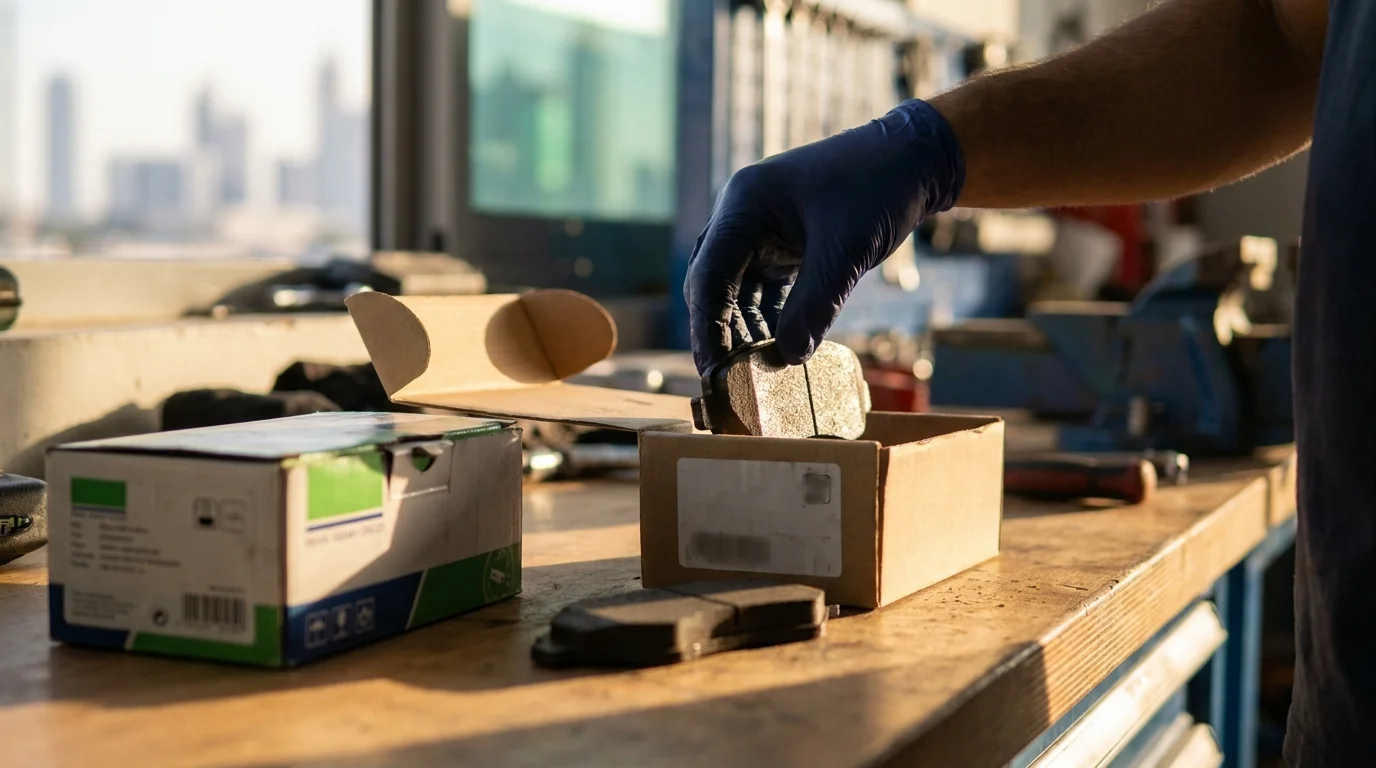
- Brakes. Pads and discs are the one place stopping distance is the entire point of the part. A poor aftermarket pad can mean a measurably longer stop, and this is not a component to economise on
- Suspension and steering components. Control arms, tie rods and similar parts carry structural load, and a low quality copy failing here is a safety event, not an inconvenience
- Timing components. Belts, chains and tensioners run with almost no clearance for error. A timing failure can take valves and pistons with it, turning a moderate repair into total engine damage
- Sensors and electronic modules. Modern cars run on sensor data the whole control system trusts. A slightly inaccurate aftermarket sensor can produce faults across systems that look unrelated and are genuinely difficult to chase down
- Anything still under a specific manufacturer warranty where the part itself is the warranted component. Using aftermarket here does not usually void the entire warranty, but if that part later fails and damages something else, the warranty on the damaged part can be affected
Where Quality Aftermarket Is the Sensible Choice
Spending genuine money here is paying for a badge, not a meaningful safety or performance difference.
- Filters. Air, oil and cabin filters from a reputable aftermarket brand perform the same job as the genuine part at a fraction of the price
- Wiper blades. A wear item replaced often enough that genuine pricing makes little sense
- Bumpers and trim. Cosmetic components where fit and finish matter more than the badge on the box
- Mirrors and lighting housings, provided the aftermarket part meets the correct photometric standard rather than simply looking similar
- Belts and hoses from an established aftermarket brand, as distinct from the timing belt itself, which stays on the genuine list above
Does Aftermarket Actually Void a Warranty?
Not automatically, and this is widely misunderstood. Fitting an aftermarket part does not void the warranty on the rest of the car. It only affects the warranty on that specific component, and only if the part itself is what fails.
Where it gets more complicated is when an aftermarket part failure damages something else. If a cheap aftermarket component fails and takes a genuine, still warranted part down with it, the manufacturer can reasonably decline to cover the resulting damage. A low quality aftermarket cabin filter failing does not touch your engine warranty. A low quality aftermarket timing belt failing very much can.
Spotting a Counterfeit
The UAE market includes a real counterfeit problem alongside legitimate aftermarket supply, and the two are easy to confuse at a glance.
- Buy from an established supplier or workshop with a reputation to protect, not the cheapest listing you can find
- Look for the ESMA conformity mark on the packaging, which is the UAE's own product safety certification
- Check print quality and spelling on the box. Counterfeit packaging frequently has small errors genuine packaging does not
- Look for a hologram, QR code or barcode, and verify it where the supplier provides a way to do so
- A part that feels noticeably lighter, thinner or roughly finished compared with the genuine equivalent is a reasonable warning sign on its own
What the Price Gap Actually Looks Like
Typical market ranges rather than fixed figures, since the spread depends heavily on the specific part and vehicle.
| Part type | Genuine premium over quality aftermarket |
|---|---|
| Filters, wipers, small trim | 2 to 4 times the aftermarket price |
| Brake pads and discs | 1.5 to 3 times |
| Suspension components | 1.5 to 2.5 times |
| Body panels and lighting | 2 to 5 times, sometimes more on luxury brands |
| Sensors and electronic modules | 2 to 4 times |
Genuine parts generally run 20 to 50 percent more than an equivalent quality part without the manufacturer's branding, though the gap widens considerably further on some categories, particularly body panels on luxury and performance marques.
Used and Salvaged Parts: A Different Calculation Entirely
Used genuine parts, typically sourced from accident damaged vehicles, are common in Dubai and can be excellent value on big ticket items like engines and transmissions, which we cover in more depth in our guide to engine repair or replacement in Dubai.
The same caution applies as with any used component: verify mileage where it is claimed, insist on a warranty from the supplier, and have whoever fits it inspect the part before money changes hands rather than after.
Ask Your Garage These Three Questions
A garage with nothing to hide answers all three without hesitating.
Which parts on this quote are genuine and which are aftermarket? You are entitled to know before you approve the work, not after.
Can I see both prices side by side? A workshop happy to show you the difference is being straightforward about where your money is going.
Can I have the old part back? A reasonable request on almost any repair, and one that tells you something about the garage if it gets a strange reaction.
Our engine repair and replacement service and the rest of our repair services quote genuine and quality aftermarket side by side as standard, and explain where the difference actually matters for your specific car rather than defaulting to one or the other.
Frequently Asked Questions
Is it illegal to use aftermarket parts in Dubai? No. Aftermarket parts are completely legal to buy and fit in the UAE. The one exception is cars under one year old, where insurance regulation requires new original parts from the agency for accident repairs regardless of preference.
Does fitting aftermarket parts void my car's warranty? Not automatically. It only affects the warranty on that specific part, and only if the part itself fails. If an aftermarket part failure damages another, still warranted component, the manufacturer can decline to cover that resulting damage.
Which car parts should never be aftermarket? Brakes, suspension and steering components, timing belts and chains, and safety related sensors. These carry either structural load or a safety consequence disproportionate to what you would save.
How much more expensive are genuine parts in Dubai? Typically 20 to 50 percent more than a quality aftermarket equivalent, though the gap runs considerably wider on body panels and parts for luxury or performance brands, sometimes several times the aftermarket price.
How do I know if an aftermarket part is good quality or counterfeit? Buy from an established supplier, check for the ESMA conformity mark, and inspect the packaging for print quality and spelling. A part that feels noticeably lighter or more roughly finished than the genuine equivalent is a reasonable warning sign.
Can I choose aftermarket parts for an insurance claim? Only if your car is over one year old. UAE insurance regulation requires new original parts from the agency for vehicles in their first year. After that, insurers may use non-original parts of a similar grade.
Spend on the Part That Actually Matters
The genuine versus aftermarket decision is not one answer applied to the whole car. It is a judgement made component by component, and getting it right on the handful of parts that carry real consequence matters more than which badge is on the filter.
If you want a straight answer on a specific part for your car, get in touch and we will tell you honestly whether genuine is worth it here or whether a quality aftermarket part does the same job for less.
Car Aid Team
7 October 2026
Share this article