Car Overheating in Dubai? Do This Right Now

Your temperature gauge is climbing towards the red, or worse, there's steam curling out from under the bonnet. You're stuck in traffic on Sheikh Zayed Road in 45°C heat and your engine is telling you something is very wrong. What you do in the next five minutes decides whether you're looking at a minor coolant top-up or a five-figure engine rebuild.
Engine overheating is one of the most common — and most damaging — car problems in Dubai. The good news is that it's rarely a surprise, and it's usually preventable. This guide walks you through exactly what to do the moment it happens, why it happens so often here, what the repairs cost in 2026, and how to make sure it never happens again.
If your engine is overheating right now, don't try to "make it home." Driving even 2–3 km with a hot engine can warp the cylinder head or blow the head gasket. Stop, cool down, and call for help.
What to Do Right Now (6 Steps)
If your temperature gauge hits the red zone or you see steam, act immediately. Follow these steps in order:
- Turn off the AC. The air conditioning puts a heavy load on the engine. Switching it off instantly reduces heat.
- Turn the heater to maximum. It feels insane in a Dubai summer, but the cabin heater pulls heat away from the engine. Crack the windows and endure it for a few minutes.
- Pull over safely as soon as you can. Don't push through it hoping the next exit is close. Get out of traffic and onto the hard shoulder.
- Switch off the engine and wait. Do not open the bonnet straight away. Let everything cool for at least 15–30 minutes.
- Never open the radiator cap while hot. The system is pressurised and will spray boiling coolant that can cause severe burns. Wait until the engine is completely cool.
- Call for roadside help or a tow. Driving an overheating car is how engines die. If you're unsure, get professional recovery instead of risking it.
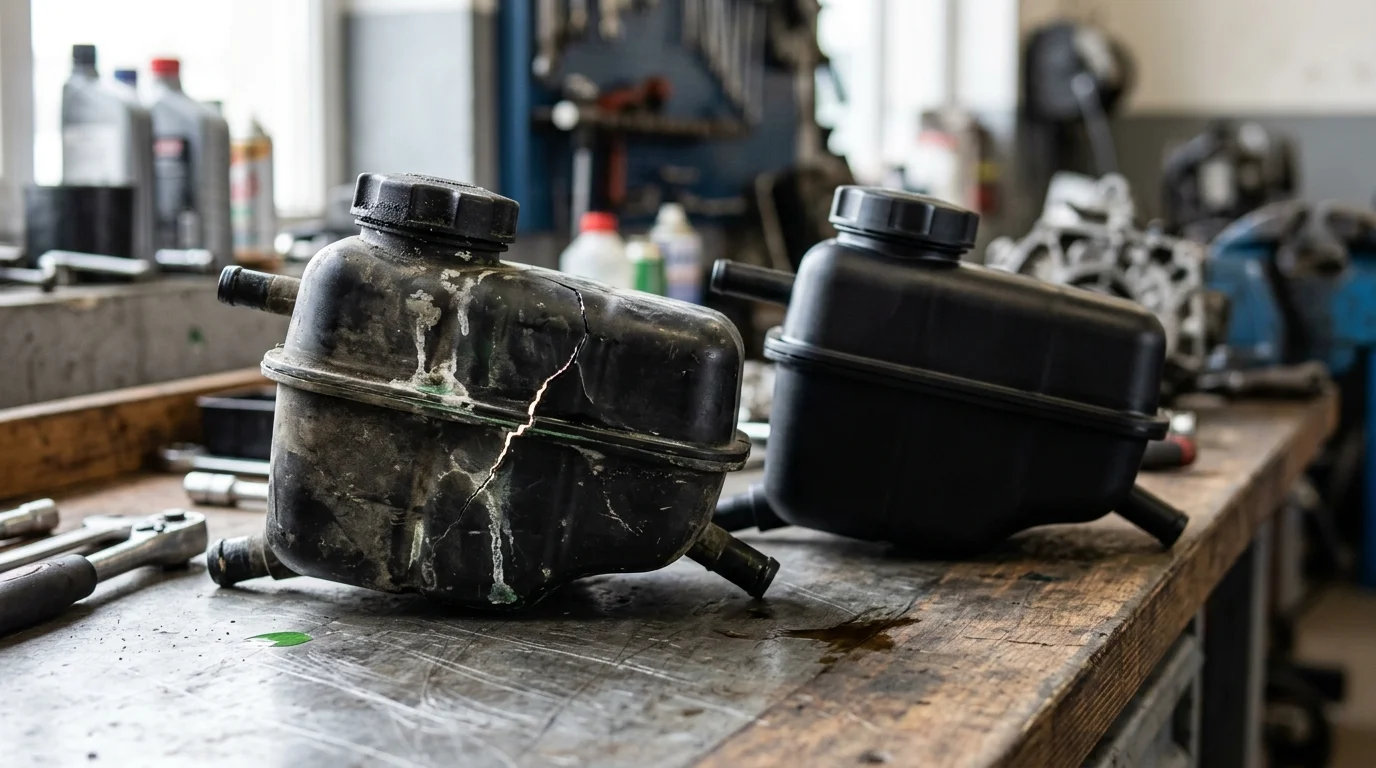
Once the engine has fully cooled, you can check the coolant reservoir. If it's low, topping it up with coolant (or distilled water in a genuine emergency) may get you moving. But a car that overheats is telling you a component has failed — get it diagnosed before it happens again. Our 24/7 emergency contact service can reach you wherever you're stranded.
Why Cars Overheat So Often in Dubai
A car's cooling system is designed for climates that average 20–25°C. Dubai regularly pushes past 45°C, and road surfaces can hit 70°C. That means your cooling system works two to three times harder here than it would in Europe or North America.
Add the local driving reality on top of that heat. Stop-start traffic means little airflow reaches the radiator, so heat builds up fast when you're crawling along Al Khail Road. Long highway runs to Fujairah or Abu Dhabi keep the engine at full load for hours. And fine desert sand clogs the radiator fins, choking the airflow the system depends on. Coolant also degrades faster in this heat, losing its ability to absorb and carry away engine heat.
Even brand-new cars aren't immune. Modern engines are more reliable, but the laws of physics don't change — if a component fails or the coolant is old, the heat wins.
The Most Common Causes
When we diagnose an overheating car in Dubai, it almost always comes back to one of these:
- Low or degraded coolant. The most frequent cause. Heat evaporates and breaks down coolant faster here, and old coolant simply can't do its job.
- A failing water pump. This circulates coolant through the engine. When it fails, circulation stops and the engine overheats fast — this needs fixing immediately.
- A stuck thermostat. If it's stuck closed, coolant can't flow to the radiator to be cooled.
- A clogged or damaged radiator. Sand, dust and debris block the fins from the outside; internal corrosion or sludge blocks them from the inside.
- Cracked or collapsed hoses. Dubai heat makes rubber harden and crack faster than the manufacturer ever planned for.
- A faulty radiator fan. Without it, there's no airflow at idle — which is exactly when you're stuck in traffic.
A proper cooling-system pressure test pinpoints which one it is, so you're not paying to replace parts that were fine. If the overheating has already caused deeper damage, our engine repair and replacement team can assess it.
What Overheating Repairs Cost in Dubai (2026)
Here are typical price ranges for cooling-system work in Dubai. These are indicative ranges, not fixed quotes — the final cost depends heavily on your car's make, and luxury and German cars sit well above economy sedans because parts cost more.
| Service / Repair | Typical Dubai Price (2026) | Time Needed |
|---|---|---|
| Cooling system pressure test & diagnosis | AED 0 – 350 (often waived if you proceed) | 30–60 min |
| Coolant top-up | AED 80 – 250 | 20 min |
| Radiator flush & coolant change | AED 200 – 1,200 | 1–2 hrs |
| Radiator hose replacement | AED 150 – 1,800 | 1–2 hrs |
| Thermostat replacement | AED 300 – 1,200 | 1–2 hrs |
| Water pump replacement | AED 500 – 2,500 | 2–4 hrs |
| Radiator replacement | AED 600 – 3,800 (economy to premium) | 2–4 hrs |
| Full cooling system overhaul | AED 1,500 – 4,500+ | Half day+ |
Here's the number that matters most: driving even a short distance with an overheating engine can warp the cylinder head, blow the head gasket, or seize the engine entirely — and that repair bill runs from AED 15,000 to AED 30,000 or more. A yearly coolant flush that costs a couple of hundred dirhams is cheap insurance against that. This is the whole reason not to gamble on "just making it home."
How to Prevent It (Dubai-Specific Maintenance)
Overheating is one of the most preventable breakdowns there is. Because of the extreme climate here, the standard global service intervals aren't enough — you need to service on a Dubai schedule:
- Flush your coolant every 12 months or 20,000 km, not the 24-month interval that manuals written for cooler climates recommend.
- Always use manufacturer-approved coolant mixed with distilled water — never Dubai tap water, which causes corrosion and scale inside the radiator.
- Never mix coolant types. Mixing an OAT coolant with a silicate-based one can turn the additives into a gel that blocks the radiator and forces a full flush plus a new radiator.
- Inspect hoses every 6 months. Heat hardens and cracks rubber far faster here.
- Have the radiator and cooling system checked before and after summer — roughly April and October.
- Manually check your coolant reservoir and oil weekly through the summer months. Don't wait for a warning light.
- Use a sunshade and park in shade where you can, to reduce the heat load on the whole car.
A pre-summer cooling-system check is one of the smartest maintenance decisions you can make in this city. You can see the full list of what we cover on our services page, and we handle every major brand, from Japanese and American cars to German and luxury models.
Frequently Asked Questions
Why does my car keep overheating even after adding coolant? If topping up coolant only helps briefly, the coolant is leaking or a component has failed — most often a stuck thermostat, a blocked radiator, or a failing water pump. Adding more coolant treats the symptom, not the cause. Get a pressure test to find the real problem.
Is it safe to drive a short distance with my car overheating? No. Even 2–3 km with an overheating engine can warp the cylinder head or blow the head gasket, turning a small repair into a bill of AED 15,000 or more. Pull over, let it cool, and call for help instead.
How often should I flush my coolant in Dubai? Every 12 months or 20,000 km — more often than the global recommendation, because Dubai's heat degrades coolant much faster. Older cars may need it sooner.
Can I use water instead of coolant in an emergency? In a genuine emergency, distilled water can get you moving safely, but you must replace it with proper manufacturer-approved coolant as soon as possible. The wrong mix causes corrosion inside the cooling system.
Do new cars overheat in Dubai? Yes. Modern cars are more reliable, but they're not immune. A failed component, old coolant, or a clogged radiator can overheat any car when it's 45°C outside and you're stuck in traffic.
Don't Gamble With Your Engine
An overheating engine is one of the few car problems that can go from a minor fix to a wrecked engine in the space of a few kilometres. If your temperature gauge is climbing, the safest, cheapest move is always to stop, cool down, and get it checked properly.
Car Aid Auto Mobile Repair Service has helped Dubai drivers out of exactly this situation since 2011, and our technicians come to you, 24/7, anywhere in the city. If you're overheating now or want a pre-summer cooling check, get in touch with our team for fast help and a straight answer.
Car Aid Team
12 August 2026
Share this article