Why Cars Fail the RTA Test in Dubai (and How to Pass)
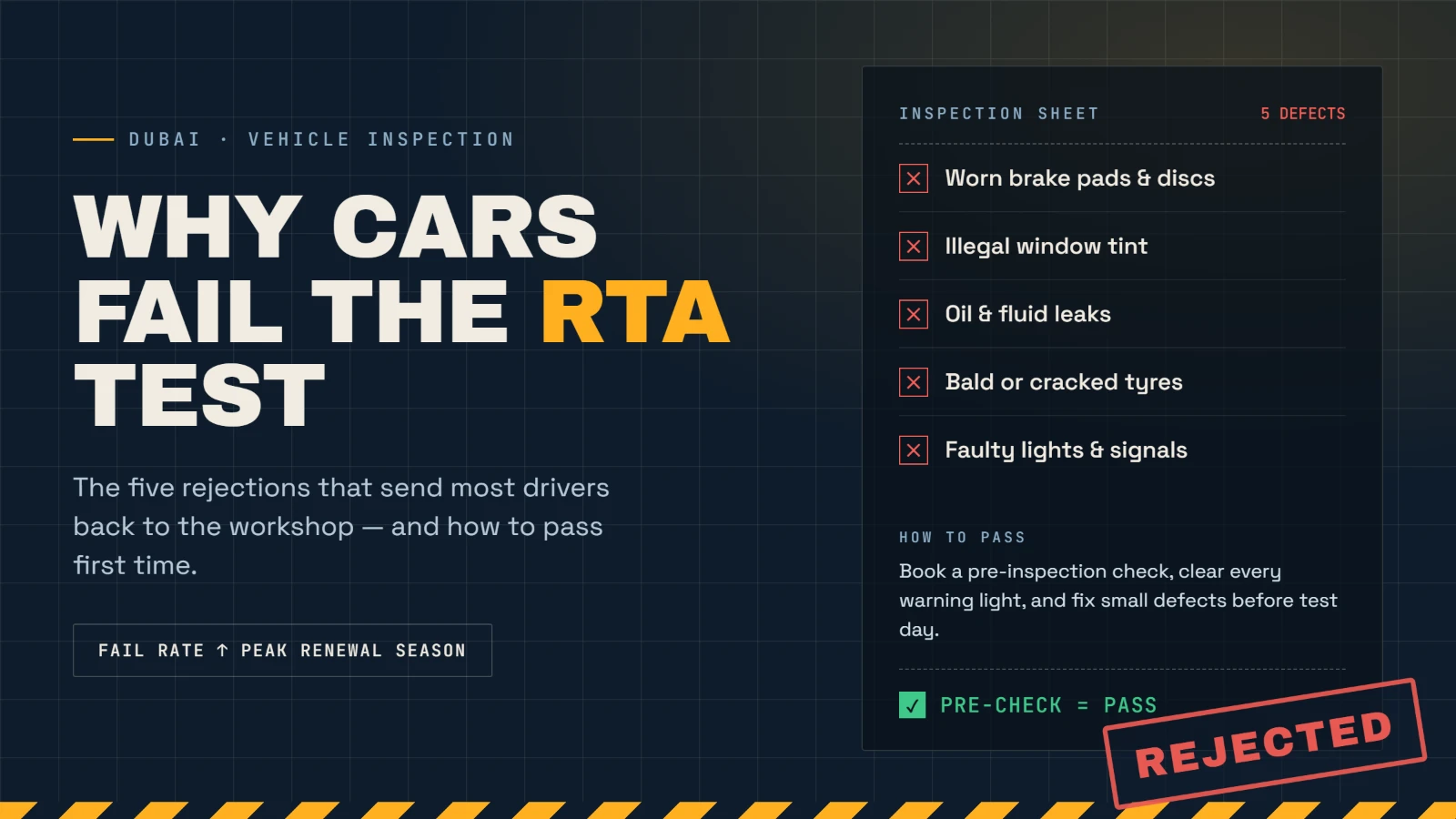
Your registration is expiring, you have booked the test, and you are quietly hoping the car gets through. Most people are. The frustrating part is that the majority of failures are not serious mechanical problems — they are worn tyres, a dead bulb, or a brake imbalance that could have been sorted in an hour beforehand.
Fail, and you are looking at a retest fee, another trip to the centre, and a scramble to get the repairs done inside the window. Here is what actually gets cars rejected in Dubai, what the process costs, and the pre-test check that keeps you from making the trip twice.
Only vehicles over three years old need a technical test before RTA will renew the registration. If your car is newer than that, you can renew without one.
The Six Things That Fail Cars Most Often
1. Tyres — the number one cause
More cars fail on tyres than anything else, and in this climate that should surprise nobody. Heat degrades rubber whether you drive on it or not, so a tyre can look barely used and still be rejected.
Three things get checked: tread depth, which must be at least 1.6 mm; the age of the tyre; and the condition of the sidewalls. Anything over about five years old is likely to be refused regardless of how much tread is left, and any crack, bulge or uneven wear pattern is an immediate fail. Find the four-digit code stamped on the sidewall — the first two digits are the week of manufacture, the last two the year.
2. Lights, including the one you forget
Inspectors work through every single lamp: headlights on both beams, brake lights, indicators, reverse lights, fog lights and the number plate light. That last one is the classic. It is the bulb nobody ever notices has gone, and it fails the car just as thoroughly as a dead headlight.
Cracked lenses and headlights that have hazed over badly enough to scatter the beam also count against you. Walk around the car with someone pressing the pedals before you go.
3. Brakes
Brakes are tested on a rolling road that measures the force at each wheel, so this is not a visual check you can talk your way past. The common failures are uneven braking between left and right, pads worn past their limit, discs that have warped, or any sign of fluid leaking from a caliper or line.
Dubai driving is unusually hard on brakes — stop-start crawling on the Sheikh Zayed cooks pads, and long descents off Jebel Jais warp discs. If the pedal pulses, pulls to one side or squeals, that is a fail waiting to happen.
4. Suspension
Tired shock absorbers, worn bushes and loose ball joints all show up on the test. Speed bumps and the occasional unmarked pothole take a steady toll, and suspension wear is gradual enough that you adapt to it without noticing.
If the car floats or wallows after a bump, dips hard under braking, or the steering feels vague, get it looked at before the test rather than after.
5. Fluid leaks
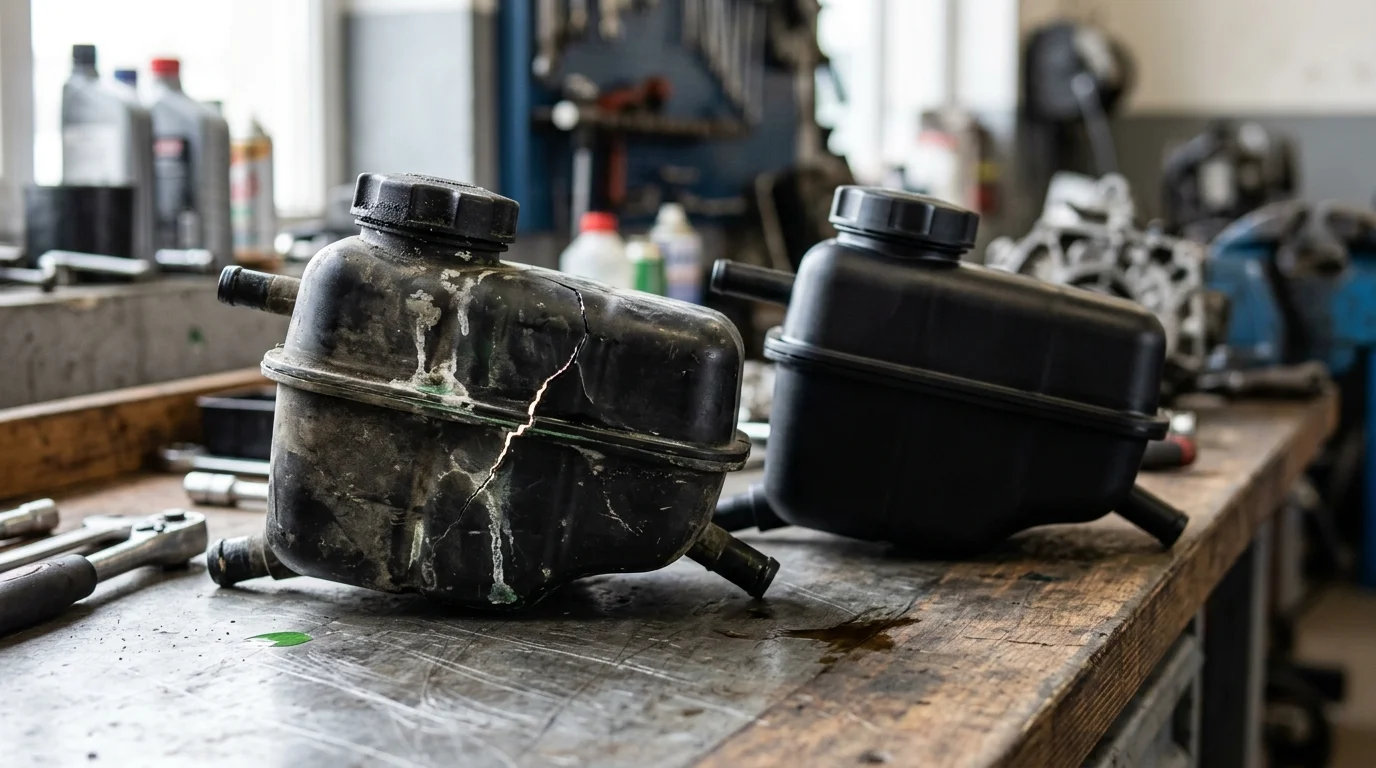
A slight damp film is usually tolerated. Anything actively dripping — engine oil, coolant, brake fluid, power steering, gearbox oil — is an automatic rejection. Park on clean ground overnight and look underneath in the morning; a patch on the floor is the easiest diagnostic there is.
6. Modifications, tint and noise
This is the category that catches people out, and enforcement has tightened. Non-standard exhausts, aftermarket lighting in the wrong colour, lifted or lowered suspension and window tint beyond the permitted level can all block the test or the registration behind it.
Dubai has also rolled out noise radars in residential areas. They measure decibel level, photograph the plate and issue the fine automatically — the general limit for street vehicles is 95 decibels, and exceeding it carries a penalty of AED 2,000 and 12 black points. A loud exhaust is no longer just a test problem.
What It Costs and How Long You Get
Fees move, so treat these as the current ballpark and confirm the exact figures with RTA or your testing centre when you book.
| Item | Typical cost |
|---|---|
| Standard test, light vehicle | around AED 150 – 170 |
| Knowledge and Innovation fee | AED 20 |
| Retest after a failure | around AED 50 – 70 |
| Registration renewal, private car | from AED 290 |
| Late renewal fine | AED 10 per day, capped at AED 500 |
Two timings matter more than the money. Your renewal window opens 150 days before expiry, and renewing early does not cost you any validity — the new registration still runs from the original expiry date. And if you fail, you get 30 days to repair the car and return to the same centre for the discounted retest. Miss that window and you pay the full fee again.
There is also a one-month grace period after expiry before fines start, but there is no good reason to use it.
The Pre-Test Check That Saves You the Retest
Twenty minutes the week before, in this order.
- Check tread depth on all four tyres and read the age code on each sidewall
- Have someone stand outside while you work through every light, plate lamp included
- Listen and feel for brake noise, pulsing or pulling on a quiet road
- Park on clean ground overnight and check underneath for drips in the morning
- Top up washer fluid and confirm the wipers clear properly, since perished blades fail too
- Clear any outstanding fines and confirm your insurance is valid, because RTA blocks the renewal otherwise
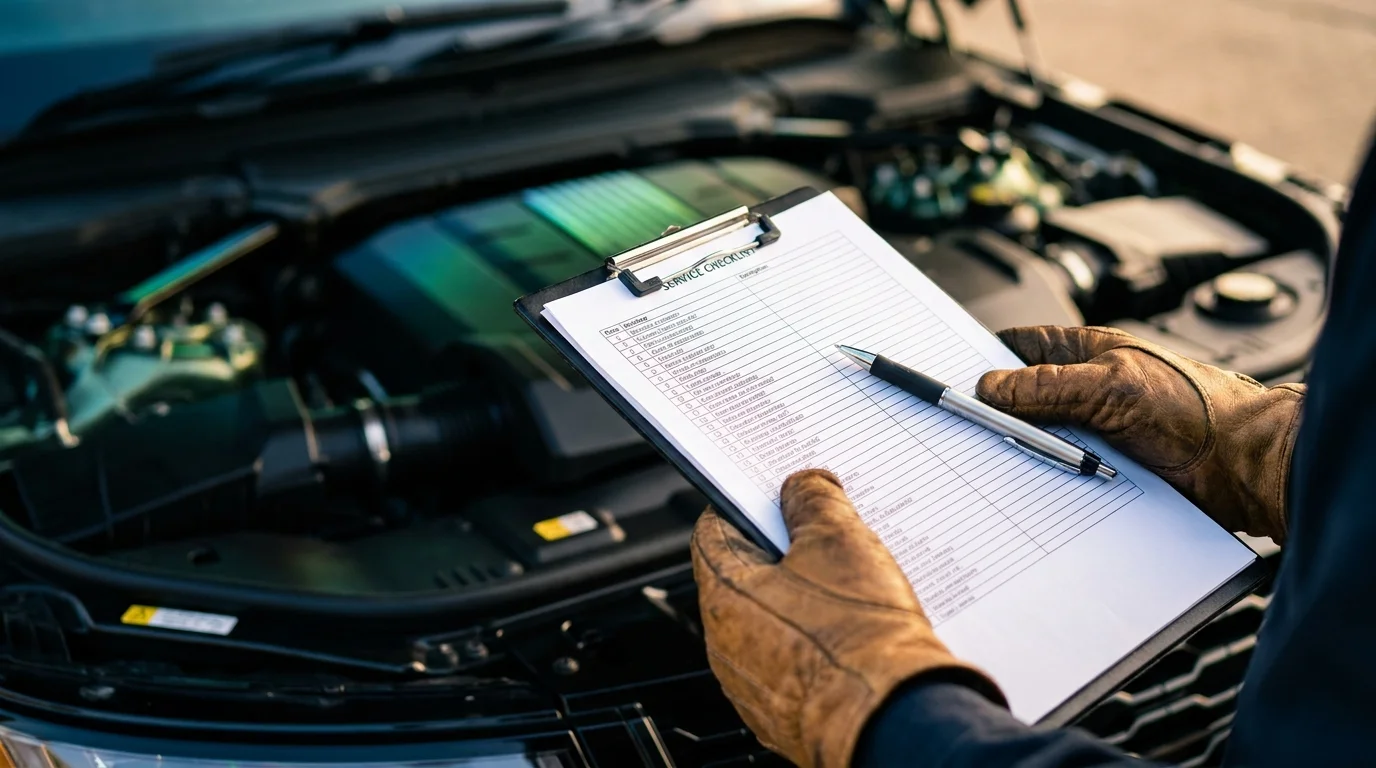
If any of that turns something up, get it fixed before your slot rather than gambling on the inspector missing it. Our technicians run pre-test checks and carry out most of the resulting repairs at your home or office, so the car is ready before it ever reaches the centre — see our mobile repair service for how that works, or the full range of services if you already know what needs doing.
Booking Has Changed
You can no longer just turn up. Since June 2025 an appointment booked through the RTA Dubai app or the RTA website is mandatory at every Dubai testing centre except Tasjeel Hatta.
Approved centres include Tasjeel, Shamil, Wasel, Mumayaz and Al Mutakamela. Note that the Tamam Al Ghandi centre in Ras Al Khor closed permanently at the start of 2026, so if that was your usual place, pick another. The test itself is quick — most centres turn it around in well under an hour.
Frequently Asked Questions
Does my car need an RTA test every year? Only if it is more than three years old. From that point the technical test is required each year before the registration can be renewed.
What happens if my car fails? You get 30 days to carry out the repairs and return to the same centre for a retest at a reduced fee. Beyond 30 days you pay the full test fee again.
How much does the RTA vehicle test cost? Expect roughly AED 150 to 170 for a light vehicle plus a small knowledge and innovation fee, with retests around AED 50 to 70. Confirm the current figures when you book.
Why do so many cars fail on tyres? Because heat ages rubber independently of mileage. A tyre with plenty of tread can still be rejected for being over about five years old or for cracking in the sidewall, and Dubai summers accelerate both.
Can I renew my registration early? Yes. The window opens 150 days before expiry and you lose nothing by renewing early — the new period still starts from your original expiry date.
Will window tint fail my car? It can. Tint beyond the permitted level, along with non-standard exhausts and aftermarket lighting, can block both the test and the registration behind it.
Get It Right the First Time
Almost everything on this list is cheaper and quicker to fix before the test than after it. A bulb, a brake pad set or a pair of tyres sorted in your own parking space beats a failed inspection, a retest fee and a second morning queuing.
If your renewal is coming up and you would rather know now than find out at the centre, get in touch and we will check the car over at your home or office anywhere in Dubai. And if you are weighing up who to trust with the repairs, our owner wrote an honest guide to choosing a garage here.
Car Aid Team
16 August 2026
Share this article