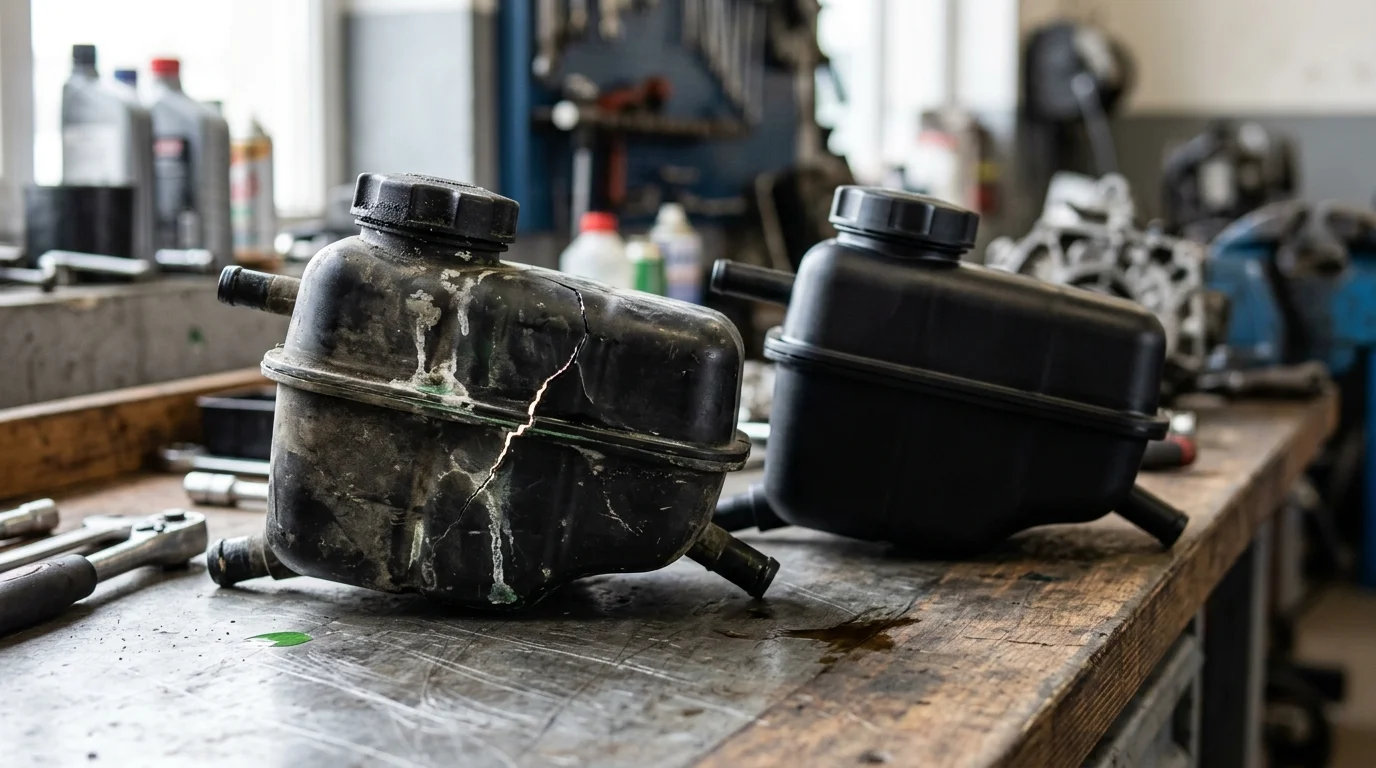
Car Transmission Service in Dubai: Costs & Warning Signs
Of everything that can go wrong with a car in Dubai, the transmission is the one that punishes neglect hardest. An engine usually warns you for weeks. A gearbox gives you the same warnings, but the window between "that felt odd" and a four-figure repair bill is far shorter — and in this climate it closes faster than the service book suggests.
The reason is worth understanding before you spend anything. Automatic transmission fluid does two jobs: it transmits power hydraulically, and it carries heat away. Heat is what destroys it. And an automatic gearbox crawling along Sheikh Zayed Road in August, with 47°C ambient air and road surfaces well past 70°C, is working in conditions the manufacturer's service interval was never written for.
This guide covers the warning signs worth acting on, why Dubai shortens transmission life so sharply, what a proper transmission service includes, and what the repairs actually cost in 2026.
If the gearbox is slipping — engine revs climbing without the car accelerating — stop driving it. Slipping means clutch material is being ground away with every kilometre, and it turns a fluid service into a rebuild remarkably quickly.
Warning Signs Your Transmission Needs Attention
Seven symptoms, roughly in order of how urgently they need looking at.
- Slipping. Revs rise but road speed does not follow. The most serious sign on this list
- Delayed engagement. You select Drive or Reverse and there is a pause, sometimes two or three seconds, before the car takes up
- Harsh or jerky shifts. A clean automatic change should be barely noticeable. A thud or jolt between gears is not normal wear
- Shuddering at steady speed. A vibration at constant cruise, often around 60 to 80 km/h, commonly points to the torque converter
- A burnt smell. Overheated transmission fluid smells acrid and faintly sweet. If you can smell it, the fluid is already cooked
- Whining or humming that changes with road speed rather than with engine revs
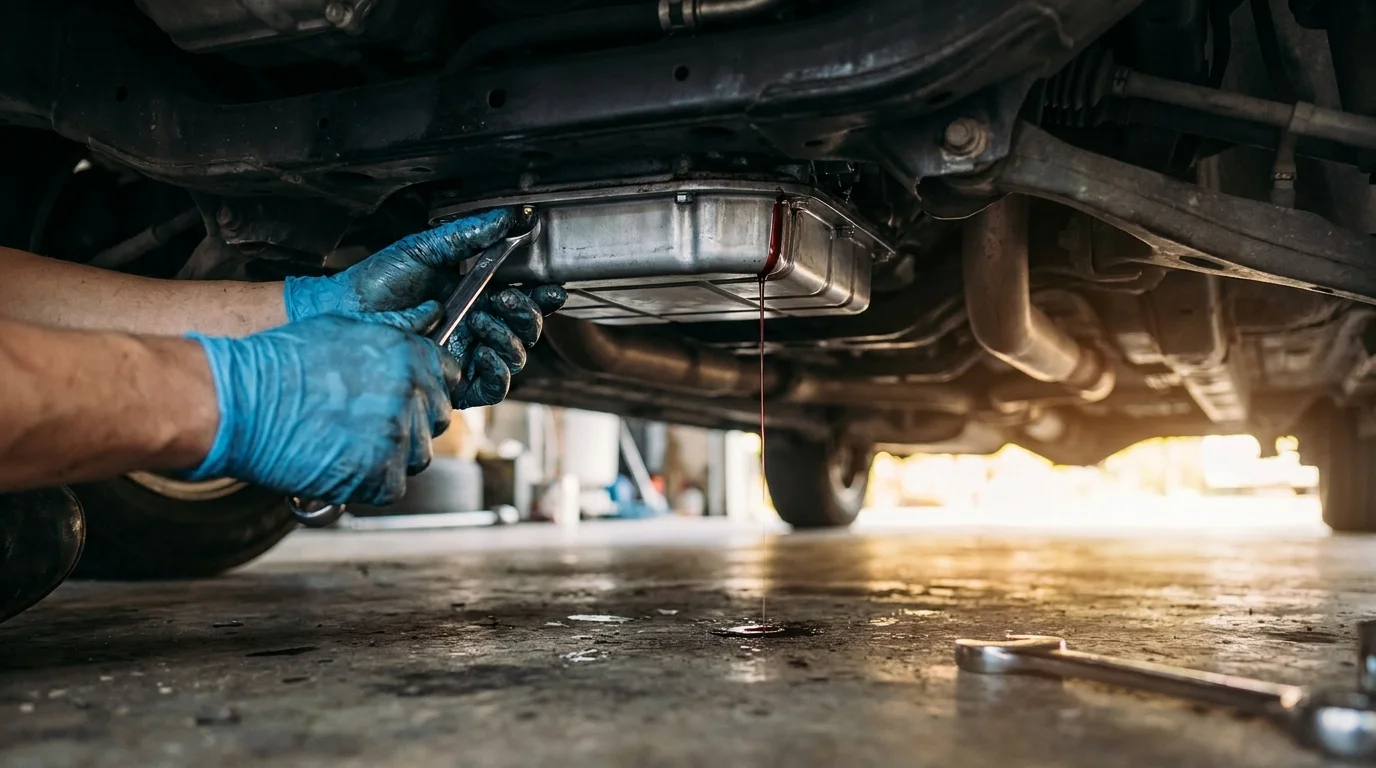
- Red or brown fluid on the ground under the middle of the car, distinct from the black of engine oil
Any one of these justifies a proper diagnostic. Two together, and you should not be planning a long drive.
Why Dubai Destroys Transmissions Faster
This is the part most transmission articles get wrong, because they were written for temperate climates.
The temperature numbers that matter
Automatic transmission fluid is designed to operate at roughly 80°C to 105°C. Inside that band it lasts as intended. Beyond it the decline is not gradual, it compounds:
- Every 11°C above about 93°C roughly halves the remaining life of the fluid
- Around 115°C the additive package starts breaking down, so the fluid stops protecting properly even while it still looks usable
- Past 127°C rubber seals harden and turn brittle, which is where internal pressure loss and external leaks begin
- By about 145°C the fluid has largely given up and clutch friction material starts to burn
Now set that against a Dubai summer. Ambient temperatures of 47 to 50°C and road surfaces above 70°C leave the cooling system far less thermal headroom to work with. A transmission that would sit comfortably mid-range in a European summer can spend hours a week in the zone where fluid life is being halved.
Stop-start traffic is worse than the motorway
Counterintuitively, a long highway run is easier on an automatic than a short commute. At steady cruise the gearbox is locked in a high gear, generating little heat, with good airflow over the cooler. In stop-start crawl it shifts constantly, the torque converter slips repeatedly, and there is almost no airflow at all.
So if your driving is mostly queuing between Business Bay and Deira rather than open road, your gearbox is working considerably harder than the odometer implies. It is the same mechanism that makes engine overheating so common here.
What a Transmission Service Actually Involves
Drain and fill, or full flush?
A drain and fill removes the fluid that comes out of the pan under gravity, typically 40 to 60 percent of the total, and replaces it with fresh. It normally also means dropping the pan to change the filter and clean the magnets, which is where you learn a great deal about the gearbox's real condition.
A full flush uses a machine to circulate almost all of the old fluid out. More thorough, but not always the right answer. On a high-mileage gearbox that has never been serviced, a sudden full flush can dislodge deposits and cause more trouble than it solves. On a well-maintained one it is excellent.
Which is appropriate depends on mileage, history and the specific gearbox. Any garage that recommends one without asking about the other two is guessing.
What should be checked
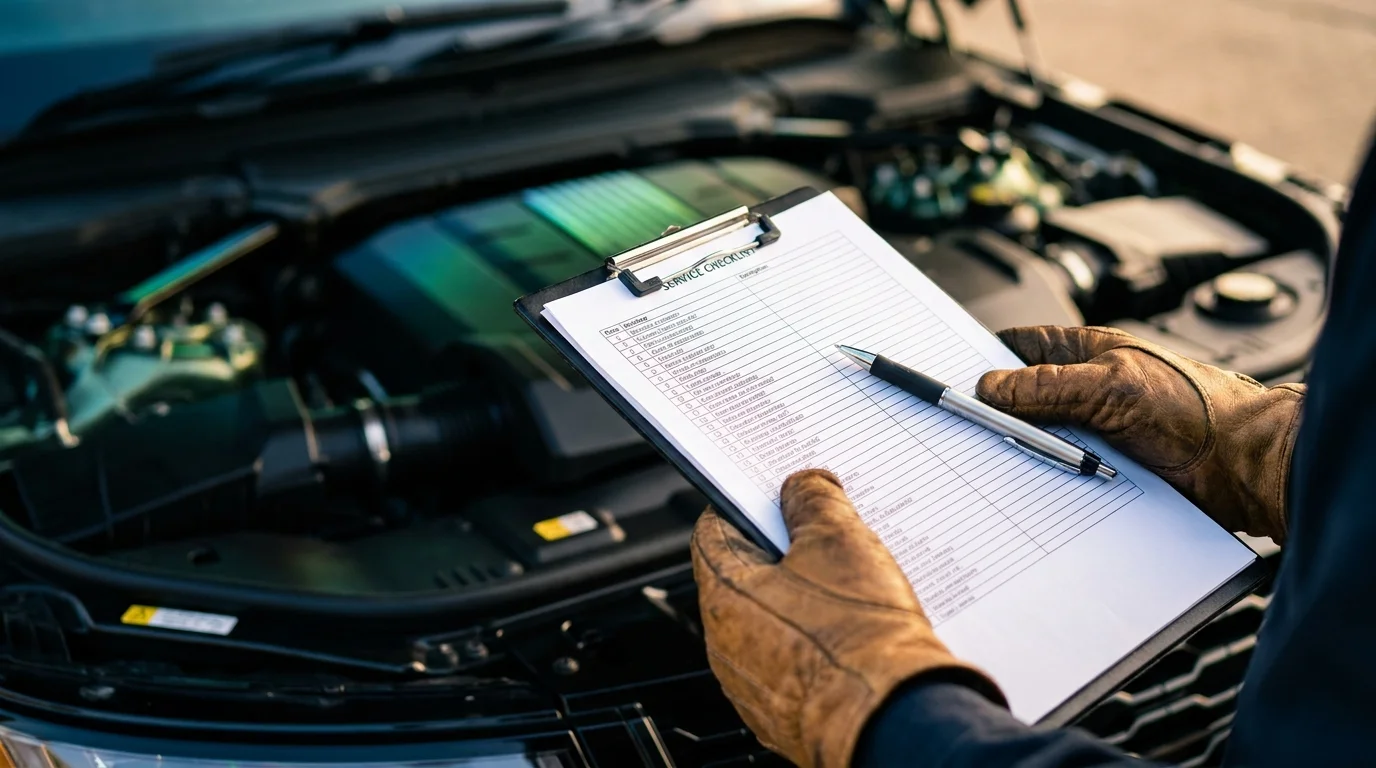
A proper service goes well beyond the fluid: filter and pan gasket, the condition of the magnets and any debris clinging to them, fluid colour and smell, a scan for stored transmission fault codes, a leak check at the pan, seals and cooler lines, and a road test afterwards to confirm shift quality.
Our car transmission repair service covers all of that, and because our technicians work from equipped vans, the diagnostic and most fluid work happens at your home or office rather than in a workshop queue.
How Often Should You Service It in Dubai?
The commonly quoted interval is every 40,000 to 60,000 km. That is a fair starting point, but treat it as the outer limit rather than the target if your driving matches the Dubai pattern.
| Your driving | Suggested fluid interval |
|---|---|
| Mostly highway, moderate mileage | 50,000 – 60,000 km |
| Mixed city and highway | 40,000 – 50,000 km |
| Mostly stop-start city traffic | 30,000 – 40,000 km |
| Regular towing or heavy loads | 25,000 – 30,000 km |
Whatever the interval, have the fluid level and condition checked at every major service. Seals degrade faster in this climate, so a slow leak that would take years to matter elsewhere can leave you low within months.
Some manufacturers describe their fluid as "lifetime fill". In UAE conditions, treat that claim with scepticism.
Transmission Repair Costs in Dubai (2026)
Typical market ranges, not quotes. European and luxury marques sit at the top of every band because parts and labour cost more.
| Work | Typical Dubai cost |
|---|---|
| Transmission fluid and filter change | AED 300 – 850 |
| Diagnostic scan and road test | AED 150 – 400 |
| Component repair — solenoid, seal, clutch pack | AED 950 – 8,000 |
| Torque converter replacement | AED 2,500 – 9,000 |
| Gearbox overhaul or rebuild | AED 4,800 – 22,000 |
| Full replacement, new or remanufactured unit | AED 15,000 – 45,000 |
Read the top and bottom of that table together, because it is the entire argument for servicing on time. A fluid and filter change is a few hundred dirhams. A rebuild is thousands. The gap between them comes down almost entirely to whether the fluid was changed while it was still doing its job. Our car service cost guide sets these figures alongside routine servicing for context.
Automatic, CVT or Dual-Clutch — Does It Matter?
Considerably, and it changes what you should ask for.
A conventional torque-converter automatic is the most forgiving and the most repairable. Shudder at cruise usually implicates the converter; harsh shifts often trace back to solenoids or contaminated fluid.
A CVT is far less tolerant of the wrong fluid or a missed interval, and it needs the manufacturer's exact specification. A generic ATF can cause belt or pulley damage that is not recoverable. Whining that rises with road speed deserves prompt attention.
A dual-clutch gearbox, common on German cars, adds a mechatronics unit combining the hydraulics and control electronics. These are a known failure point, they are sensitive to heat, and they usually show up as jerky low-speed shifting or a refusal to select a gear rather than classic slipping.
The practical point: fluid specification is not interchangeable between these. Using the wrong one is a genuine way to destroy a healthy gearbox.
Can You Check the Fluid Yourself?
Sometimes. Many older cars have a transmission dipstick, usually checked with the engine warm and idling in Park — your owner's manual gives the exact procedure, and it varies more than you would expect.
Healthy fluid is translucent red or pink. Darkening to brown means it is due. Very dark, opaque or burnt-smelling means overdue, and gritty fluid means metal is circulating where it should not be.
Plenty of modern cars have no dipstick at all and are designed to be checked only from underneath at a specified fluid temperature. If yours is one of those, do not improvise. Overfilling an automatic causes foaming and pressure problems, and underfilling causes exactly the overheating you were trying to avoid.
Frequently Asked Questions
How often should transmission fluid be changed in Dubai? Every 40,000 to 60,000 km is the general guidance, but reduce that to 30,000 to 40,000 km if your driving is mainly stop-start city traffic. Heat and constant shifting age the fluid, not distance alone.
How much does transmission repair cost in Dubai? A fluid and filter change typically runs AED 300 to 850. Component-level repairs range from around AED 950 to AED 8,000, a rebuild from AED 4,800 to AED 22,000, and a full replacement AED 15,000 to AED 45,000 depending on the car.
Why is my car jerking when it changes gear? Common causes are degraded or contaminated fluid, a failing solenoid, or worn clutch packs. On a dual-clutch gearbox the mechatronics unit is a frequent culprit. It needs a diagnostic scan rather than guesswork.
Can I drive with a slipping transmission? You should not. Slipping means friction material wears away every time it happens, which converts a repairable fault into a rebuild.
Is "lifetime" transmission fluid really lifetime? Not in this climate. Those claims assume moderate temperatures and gentle duty cycles. In UAE heat and traffic, changing the fluid at a sensible interval is inexpensive insurance against a very expensive failure.
Does an automatic transmission need servicing if it feels fine? Yes. Fluid degrades with heat and time whether you can feel it yet or not, and by the time symptoms appear some wear has already happened. Servicing on schedule is the whole point.
Look After It and It Will Last
A transmission is one of the few parts of a car where routine maintenance genuinely decides whether you spend hundreds or tens of thousands. Dubai's heat and traffic stack the odds against you, which makes servicing on a realistic interval — rather than the one printed for a milder country — the highest-value thing you can do for it.
If your car is slipping, shifting harshly, or simply overdue, our transmission repair specialists will diagnose it properly before recommending anything. And if the fault turns out to be engine-side rather than gearbox, our engine repair team handles that too. Get in touch and we will come to you, anywhere in Dubai.
Car Aid Team
21 August 2026
Share this article